
Stewardship in Practice: Patagonia and The Care of Creation
Patagonia is often seen as an outdoor apparel company, but its deeper story is about stewardship. Through its approach to ownership, governance, and environmental responsibility, it raises enduring questions about what businesses owe to the people, communities, and creation they serve.
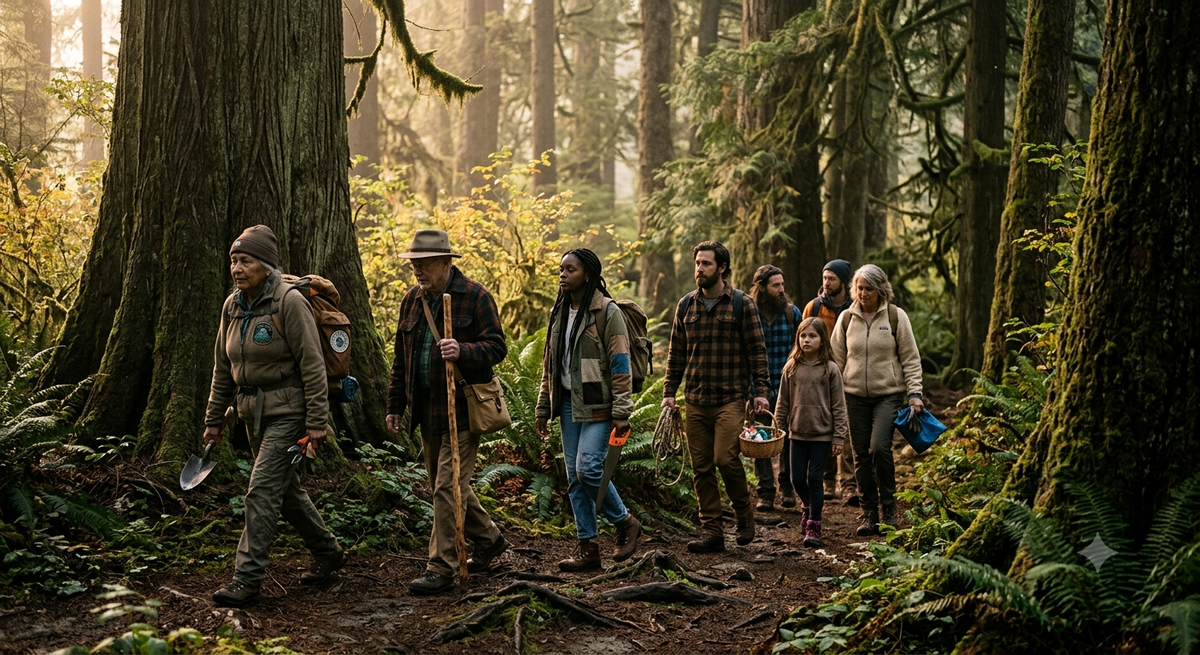
What does it mean for a business to care for the natural world—not simply through philanthropy or marketing, but through the way it is owned, governed, and entrusted to future generations?
At a Glance
Patagonia is an American outdoor apparel and equipment company founded in 1973 by rock climber Yvon Chouinard. Headquartered in Ventura, California, the company designs and manufactures clothing, gear, and accessories for climbing, hiking, skiing, surfing, trail running, fly fishing, and other outdoor pursuits. Its products are sold in more than 10 countries through company-owned stores, wholesale partners, and online channels, while reaching customers globally. The company employs several thousand people worldwide and is widely recognized for its emphasis on product durability, environmental advocacy, and responsible manufacturing.
Although privately held for most of its history, Patagonia underwent a significant ownership transition in 2022. Rather than selling the company or taking it public, Chouinard and his family transferred ownership into structures designed to preserve Patagonia's mission while directing future profits—after reinvestment in the business—toward efforts addressing climate change and protecting nature.
Today, Patagonia operates as a profitable global enterprise whose ownership model has become almost as widely discussed as its products. The company occupies a distinctive place at the intersection of commerce, environmental responsibility, and institutional design.
Opening Reflection
Most discussions about stewardship begin with resources. Forests, rivers, farmland, or financial assets become the subjects of conversation. Yet stewardship begins somewhere even earlier—with ownership itself.
Ownership answers a simple but profound question: Who holds responsibility for what has been entrusted to them? Modern economies often describe ownership primarily as a bundle of rights. Older traditions tended to describe it equally as a collection of obligations. Land was not merely possessed. Businesses were not merely investments. Institutions existed within communities and inherited responsibilities that extended beyond quarterly results.
Few organizations embody this tension more visibly than Patagonia. Its story is often told through jackets, climbing equipment, and environmental campaigns. Those are certainly part of the narrative. The more interesting question, however, concerns the institution itself. Can a company remain commercially successful while treating the natural world not simply as a resource to be consumed, but as something deserving of care? And if stewardship requires sacrifice, what happens when commercial interests and ecological responsibilities inevitably collide?
These questions reach far beyond one outdoor clothing company. They invite reflection on what businesses—and those who lead them—are ultimately for.
The Story
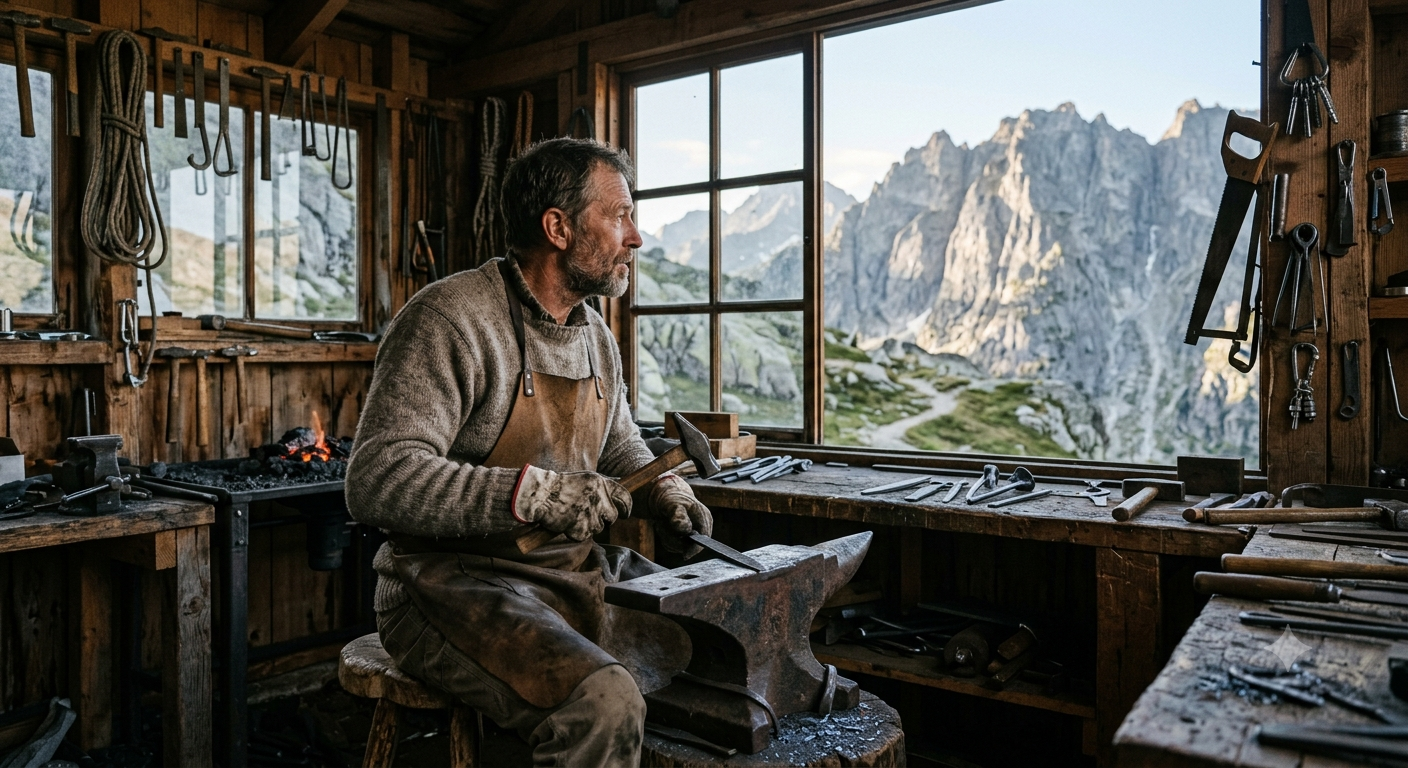
Patagonia's origins were unusually modest. Before there was a clothing company, there was a blacksmith's forge.
During the late 1950s and early 1960s, Yvon Chouinard made climbing pitons by hand for fellow climbers in California's Yosemite Valley. Ironically, those metal pitons damaged the very rock faces that climbers admired. As awareness grew, Chouinard's business helped promote reusable aluminum chocks that significantly reduced harm to climbing routes. Long before environmental responsibility became fashionable, Patagonia encountered an uncomfortable truth: even recreation could damage what people loved.
There is something quietly remarkable about an organization that allowed its own successful product to become obsolete because it believed a better alternative existed.
The apparel business emerged almost accidentally. Climbers wanted durable rugby shirts and practical outdoor clothing that conventional manufacturers were not producing. Patagonia was formally established in 1973 and steadily expanded into technical outdoor apparel known for quality, repairability, and functional design rather than fast-changing fashion.
Growth brought new opportunities and new contradictions. Every additional garment required raw materials, manufacturing, transportation, and energy. A company encouraging people to enjoy nature also depended upon producing more goods. Rather than pretending this tension did not exist, Patagonia increasingly acknowledged it publicly.
Its famous 2011 advertisement urging consumers, "Don't Buy This Jacket," surprised many observers. The message was less a rejection of commerce than an invitation to reconsider consumption itself. Patagonia encouraged customers to repair clothing, purchase only what they genuinely needed, and extend the life of products whenever possible.
The company also invested in recycled materials, supply-chain transparency, fair labor initiatives, regenerative agriculture, and programs supporting environmental organizations. Not every effort succeeded perfectly, nor were all supply-chain challenges resolved. But the trajectory remained unusually consistent: business growth would be accompanied by continual questioning of business practices.
The defining chapter arrived in 2022.
Rather than selling Patagonia or transferring ownership through conventional inheritance, Chouinard and his family reorganized the company. Voting control was placed under the Patagonia Purpose Trust to safeguard the company's mission, while the economic interests not required for operating the business were transferred to the Holdfast Collective, a nonprofit dedicated to combating climate change and protecting undeveloped land. Future profits not reinvested into Patagonia would help fund environmental work.
Whether one agrees with every aspect of this model or not, it represented an uncommon attempt to redesign ownership itself around stewardship rather than wealth extraction.
Stewardship in Practice
Stewardship often sounds admirable until it demands institutional sacrifice. Patagonia is interesting precisely because it has repeatedly embedded costly commitments into its governance rather than limiting them to corporate messaging.
Its ownership structure illustrates this most clearly.
Most businesses eventually confront familiar pathways: acquisition, public listing, succession within a family, or financial liquidation. Patagonia deliberately pursued another route. By separating economic benefit from mission control, it attempted to answer a question that many founder-led organizations struggle with: how can values survive the founder?
Institutional design matters because founders do not live forever.
Seen another way, stewardship requires mechanisms capable of outlasting personal conviction. Culture is valuable, but governance determines whether culture survives periods of leadership transition.
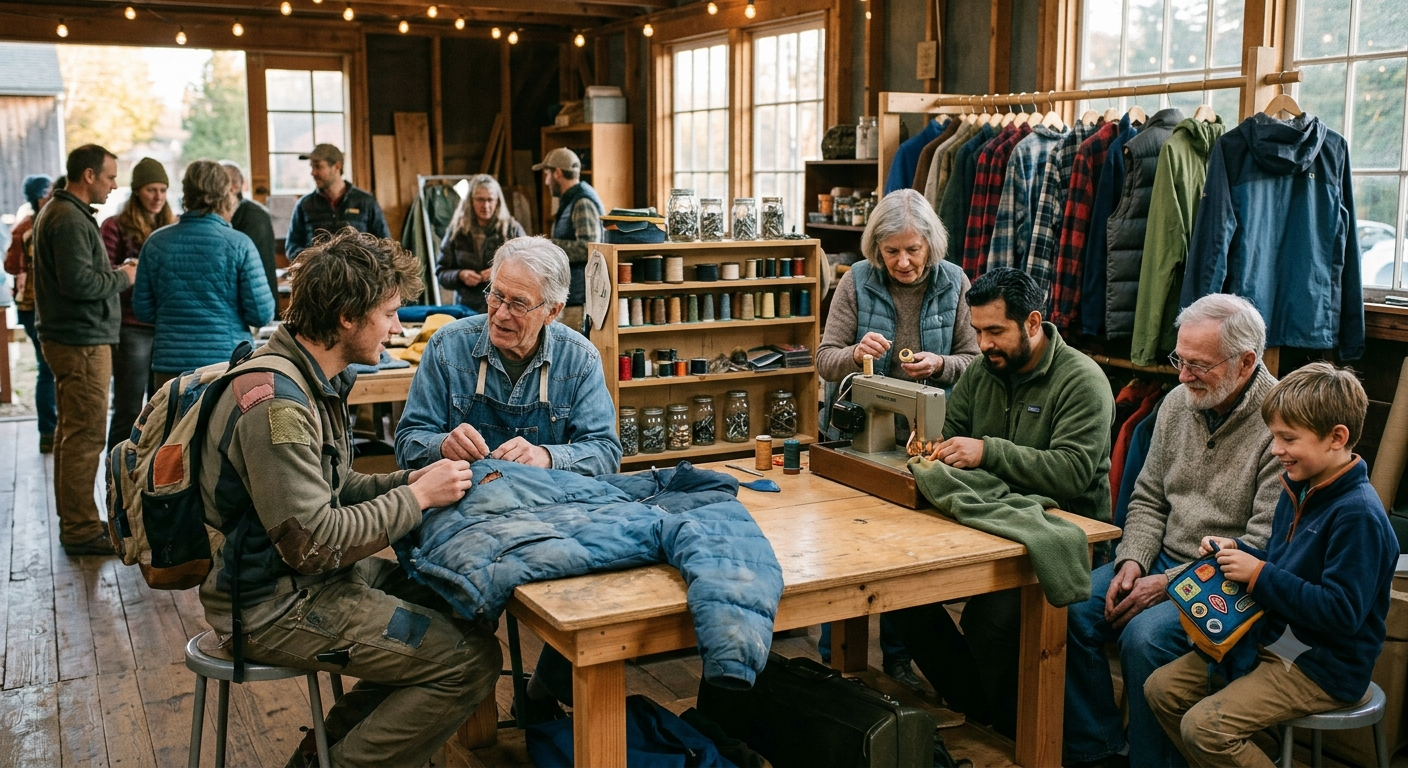
Patagonia has also practiced stewardship through restraint. Product repair services, the Worn Wear program, and efforts encouraging customers to extend product life all run against the incentives of perpetual consumption. These initiatives acknowledge a difficult reality: a healthier relationship between business and nature may sometimes require selling less, or at least encouraging customers to buy differently.
The company has similarly invested in environmental advocacy, occasionally taking public positions on conservation and climate policy. Admirers see this as responsible corporate citizenship. Critics argue that businesses should remain focused on commercial activity rather than political engagement. Both perspectives raise legitimate questions about the role corporations ought to play within democratic societies.
Patagonia also illustrates that stewardship is rarely free from contradiction.
Manufacturing clothing inevitably consumes water, energy, minerals, synthetic fibers, transportation networks, and global supply chains. Even the most responsibly produced garment carries an environmental footprint. Patagonia has openly acknowledged this tension, describing itself at various times as being "in business to save our home planet" while recognizing that its own operations contribute to environmental pressures.
Perhaps this honesty explains part of its credibility. Rather than presenting itself as environmentally pure, Patagonia often frames stewardship as continual improvement rather than moral perfection.
For modern institutions, that distinction matters. Stewardship is less about achieving flawless outcomes than about refusing complacency.
Successes and Criticisms
Patagonia's influence extends well beyond outdoor apparel. It helped normalize repair culture, expanded conversations around sustainable materials, encouraged transparency in supply chains, and inspired many businesses to think more carefully about environmental responsibility. Its ownership transition has also become a widely studied example of mission-preserving governance.
Yet admiration should not obscure legitimate criticisms.
Some observers question whether premium-priced products make sustainable consumption accessible only to wealthier consumers. Others argue that any company built upon manufacturing and consumption cannot fully reconcile environmental aspirations with commercial growth.
Patagonia's public advocacy has likewise attracted disagreement. While supporters view activism as a natural extension of corporate responsibility, others worry that businesses risk alienating customers or overstepping their institutional role when engaging in contentious public debates.
There are also practical questions surrounding its ownership model. It remains relatively new, and its long-term resilience across future generations has yet to be tested. Institutional experiments deserve careful observation rather than premature celebration.
History often remembers bold decisions. Stewardship, however, is judged over decades.
Lessons for Modern Stewards
1. Ownership shapes behavior.
Governance is not administrative detail. It quietly determines whose interests an institution will serve when difficult choices arise. Every organization, whether a family business or a multinational corporation, should periodically ask whether its ownership structure reinforces its stated purpose.
2. Stewardship requires limits.
Modern culture often assumes growth is an unquestioned good. Patagonia suggests another possibility: institutions may sometimes strengthen their mission by embracing restraint, durability, and repair instead of endless replacement.
3. Values become credible when they become expensive.
Mission statements cost little. Meaningful stewardship eventually requires decisions that carry financial consequences. Principles matter most when following them becomes inconvenient.
4. Institutions should be designed to outlive personalities.
Founders inspire organizations, but enduring institutions require structures that preserve purpose beyond individual leadership. Stewardship thinks in generations rather than careers.
5. Caring for creation also means caring for people.
Environmental responsibility cannot be separated from workers, suppliers, customers, and communities. Healthy institutions recognize that ecological and human flourishing are deeply connected rather than competing priorities.
Reflection
There is a temptation to view environmental stewardship as a specialized concern, reserved for conservationists, scientists, or outdoor companies. Yet every institution inherits something it did not create. A business receives ecosystems, communities, legal systems, employees, customers, and accumulated trust. None of these belong exclusively to those currently in charge.
Patagonia's story is therefore less about jackets than about inheritance. It invites us to consider whether ownership is best understood as possession or as guardianship. That distinction reaches into boardrooms, schools, churches, charities, governments, and families alike.
The care of creation has never been solely about preserving landscapes. It is also about cultivating institutions worthy of the world they inhabit. Long after today's leaders have departed, others will inherit both the natural environment and the organizations we leave behind.
The question waiting for every steward is quietly simple: Will those who come after us receive something diminished—or something more capable of sustaining life than what we ourselves inherited?
Institutional Disclaimer
The Triquetrus Institute is an internal research and reflection initiative of Triquetrus Initiatives LLP (India). All content published by the Institute is intended solely for educational and discussion purposes. It does not constitute legal, financial, investment, regulatory, or professional advice and should not be relied upon as such.
Attribution and Usage Rights
Images accompanying this article have been generated using artificial intelligence models and are presented for illustrative purposes only. Such images are synthetic in nature and should not be interpreted as factual representations of real persons, events, or conditions.
This article is subject to the full Content Ownership, Usage Rights, Liability Disclaimer and all applicable Terms and Conditions available at the Triquetrus Collective Legal Portal:
https://ti.triquetruscollective.com/triquetrus-collective-legal-portal/
Readers agree to these terms by engaging with the content.
Copyright © 2026 Triquetrus Initiatives LLP, India. All rights reserved.