Stewardship in Practice: Novo Nordisk and the Stewardship of Innovation
"Scientific breakthroughs matter, but so do the structures that preserve scientific purpose across generations."

What does it mean to steward scientific innovation in a way that serves both future generations and present human needs?
Organization Snapshot
Novo Nordisk is a Danish pharmaceutical company specializing in diabetes care, obesity treatments, rare diseases, and related chronic health conditions. Founded in 1923, its origins trace back to the pioneering commercialization of insulin in Denmark following its discovery in Canada. The company is headquartered in Bagsværd, Denmark, and operates in more than 170 countries.
Today, Novo Nordisk employs approximately 70,000 people worldwide and ranks among the world's largest healthcare companies. Its most widely recognized products include insulin therapies, Ozempic, and Wegovy. The company generates annual revenues exceeding US$40 billion and manages assets measured in the hundreds of billions of Danish kroner.
One of Novo Nordisk's most distinctive features is its ownership structure. Control of the company rests with the Novo Nordisk Foundation through its holding company, Novo Holdings. This arrangement gives the foundation majority voting control while allowing publicly traded ownership through listed shares. The structure was designed to support both commercial success and long-term scientific and societal objectives.
Opening Reflection
Innovation is often celebrated, but stewardship of innovation is discussed far less frequently.
Modern economies tend to focus on invention itself: the breakthrough technology, the blockbuster product, the visionary founder. Yet innovation does not emerge in a vacuum. It requires institutions capable of funding long periods of experimentation, tolerating uncertainty, protecting scientific integrity, and balancing commercial incentives against wider social responsibilities.
This raises a deeper question: who stewards innovation once it becomes economically valuable?
Many organizations struggle with this challenge. Public companies face quarterly pressures. Family businesses eventually encounter succession issues. Governments often operate on electoral timelines that can be shorter than scientific cycles.
At first glance, Novo Nordisk appears to be simply another successful pharmaceutical company. Yet its century-long history suggests something more interesting. The company offers a case study in how ownership structures, governance systems, and institutional purpose can shape the way innovation is pursued, protected, and sustained over generations.
The more enduring lesson may not be the medicines Novo Nordisk develops, but the institutional architecture that enables those discoveries to occur.
The Story
The origins of Novo Nordisk lie in one of the most important medical breakthroughs of the twentieth century: insulin.
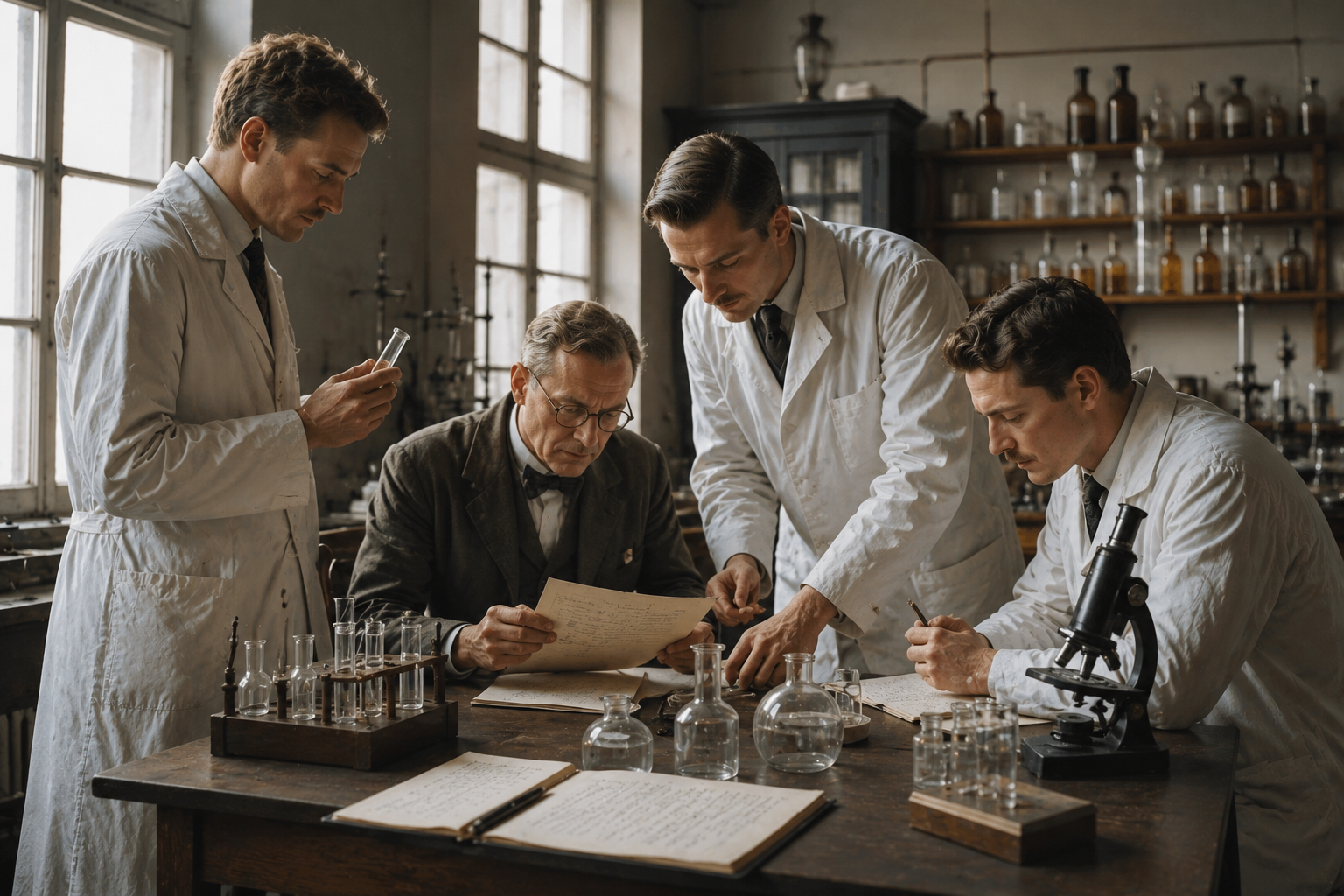
In the early 1920s, Danish physiologist August Krogh obtained rights to manufacture insulin in Scandinavia after learning of its development by Canadian researchers. The resulting enterprise, Nordisk Insulinlaboratorium, became one of the first organizations dedicated to making insulin widely available to patients suffering from diabetes.
Over time, competition emerged. Another Danish company, Novo Terapeutisk Laboratorium, entered the field and developed its own capabilities in insulin production and pharmaceutical research. For decades the two companies competed, advanced scientific knowledge, and expanded internationally.
In 1989, the firms merged to form Novo Nordisk.
Yet perhaps the most consequential development was not the merger itself. It was the evolution of the foundation ownership model that had accompanied the companies from their early years. Rather than allowing ownership to fragment or become subject entirely to market forces, the foundations associated with the original companies gradually evolved into a governance structure designed to preserve scientific purpose across generations.
Few people realize that the roots of Novo Nordisk's ownership model stretch back almost as far as the company itself. Long before modern discussions about stakeholder capitalism or purpose-driven enterprise, the organization's founders and stewards were experimenting with ways to ensure that scientific progress could remain connected to long-term societal benefit.
Stewardship in Practice
If Novo Nordisk teaches anything about stewardship of innovation, it is that innovation requires institutional patience.
Scientific discovery rarely conforms to quarterly earnings cycles. New therapies often require decades of research, testing, regulatory review, manufacturing investment, and clinical validation. Organizations that cannot think beyond short-term horizons often struggle to sustain meaningful scientific breakthroughs.
Ownership as a Stewardship Mechanism
The Novo Nordisk Foundation's controlling ownership position is central to this story.
Unlike many public corporations, Novo Nordisk operates under a model in which a foundation maintains voting control while public shareholders provide capital and market discipline. The arrangement creates an unusual balance: management remains accountable to financial performance, but the company's long-term direction is protected from abrupt ownership changes or activist pressures.
Whether one agrees with this model or not, it reflects a stewardship principle worth considering: innovation often requires owners willing to think in decades rather than quarters.
Governance for Continuity
Ownership alone does not guarantee stewardship.
Novo Nordisk has spent decades developing governance systems intended to align commercial success with broader social objectives. The company's longstanding emphasis on what it calls the "Triple Bottom Line" sought to integrate financial, social, and environmental considerations into decision-making.
Critics may debate how successfully such ideals are implemented in practice, but the underlying aspiration is noteworthy. The organization attempts to embed purpose into governance structures rather than relying solely on the goodwill of individual leaders.
This distinction matters. Stewardship becomes more durable when it is institutional rather than personal.
Reinvestment in Knowledge
Another aspect of Novo Nordisk's model is the relationship between commercial success and scientific reinvestment.
Profits generated by the operating company help support the Novo Nordisk Foundation, which in turn funds extensive research, education, healthcare initiatives, and scientific infrastructure. Over time, the foundation has become one of the world's largest philanthropic supporters of scientific research.
This creates an interesting cycle. Commercial innovation funds broader scientific advancement, which can eventually contribute to future innovation.
Rather than viewing innovation as a one-time achievement, the system treats it as a renewable resource that requires ongoing cultivation.
Human Flourishing as an Innovation Goal
The stewardship of innovation also requires clarity about what innovation is for.
Novo Nordisk's focus on chronic diseases such as diabetes and obesity reflects a commitment to addressing conditions that affect hundreds of millions of people globally. While the company is undoubtedly a commercial enterprise, its success is tied directly to improving health outcomes.
This does not eliminate ethical questions. Pharmaceutical pricing, healthcare access, and global disparities remain contentious issues. Yet the company's history illustrates an important stewardship principle: innovation serves human flourishing most effectively when it remains connected to genuine human needs.
Successes and Criticisms
Novo Nordisk's achievements are substantial.
The company has played a major role in advancing diabetes treatment for generations. More recently, its obesity therapies have reshaped global conversations about weight management and metabolic health. Its foundation ownership model is frequently cited as a successful example of long-term corporate governance.
Yet stewardship also involves acknowledging tensions.
One recurring criticism concerns the affordability and accessibility of medicines. Breakthrough treatments can create extraordinary value, but they can also raise difficult questions about who benefits from innovation and who is excluded.
Another tension arises from concentration of control. The same ownership structure that enables long-term thinking can also raise concerns about accountability and governance. Recent debates surrounding leadership transitions and board influence have prompted questions about the balance between stability and oversight.
Rapid growth presents additional challenges. As demand for obesity treatments surged, Novo Nordisk faced pressures related to manufacturing capacity, organizational complexity, and global expectations.
These tensions do not invalidate the stewardship model. Rather, they reveal an important truth: stewardship is not a solved problem. It is an ongoing practice of balancing competing responsibilities.

Lessons for Modern Stewards
1. Innovation Needs Patient Capital
Organizations pursuing meaningful breakthroughs must align their ownership structures with their time horizons. Scientific, educational, and social innovations often require years before producing visible results.
2. Governance Shapes Outcomes
Culture matters, but governance matters more. Stewardship becomes more resilient when long-term commitments are embedded in institutions rather than dependent on charismatic individuals.
3. Reinvest Success Into Future Capacity
Novo Nordisk's model demonstrates the value of converting present success into future capability. Research, education, and talent development should be viewed as stewardship investments rather than expenses.
4. Purpose Must Survive Leadership Changes
Strong institutions outlast founders and executives. Stewardship requires systems that preserve mission through multiple generations of leadership.
5. Innovation Carries Social Obligations
The stewardship of innovation is not merely about creating new products. It involves asking how innovation affects communities, healthcare systems, and human well-being over time.
Reflection
Innovation is often treated as an act of creation.
Stewardship invites a different perspective. It asks what happens after creation. Who protects the innovation? Who funds the next generation of discovery? Who ensures that today's breakthroughs do not undermine tomorrow's possibilities?
Novo Nordisk suggests that the stewardship of innovation may depend less on genius than on institutional design. Scientific breakthroughs matter, but so do the structures that preserve scientific purpose across generations.
Perhaps the deeper lesson is that innovation itself is not the asset being stewarded.
The true asset is society's capacity to keep innovating responsibly.
For modern stewards—whether they lead businesses, foundations, universities, churches, or families—the challenge remains the same: how do we build institutions that can pursue discovery without losing sight of the people discovery is meant to serve?

Sources
- Novo Nordisk Annual Report 2025
- Novo Nordisk Corporate Governance Report 2025
- Novo Nordisk Investor Relations – Share and Ownership Structure
- Novo Nordisk Corporate Governance Overview
- Novo Nordisk Foundation – Ownership and Governance Materials
- Novo Holdings Annual Results 2025
- Novo Group Governance Principles
- Reuters reporting on Novo Nordisk governance and leadership changes (2025–2026)
- Reuters reporting on Novo Nordisk Foundation global health initiatives
- Copenhagen Business School research on foundation ownership and Novo Nordisk
- Historical materials on August Krogh and the origins of insulin production in Denmark
- Novo Nordisk Foundation Impact Report 2024
- Academic literature on foundation-owned enterprises and long-term governance
- Major business reporting from Financial Times, Reuters, and The Economist on Novo Nordisk's development and ownership structure
Institutional Disclaimer
The Triquetrus Institute is an internal research and reflection initiative of Triquetrus Initiatives LLP (India). All content published by the Institute is intended solely for educational and discussion purposes. It does not constitute legal, financial, investment, regulatory, or professional advice and should not be relied upon as such.
Attribution and Usage Rights
Images accompanying this article have been generated using artificial intelligence models and are presented for illustrative purposes only. Such images are synthetic in nature and should not be interpreted as factual representations of real persons, events, or conditions.
This article is subject to the full Content Ownership, Usage Rights, Liability Disclaimer and all applicable Terms and Conditions available at the Triquetrus Collective Legal Portal:
https://ti.triquetruscollective.com/triquetrus-collective-legal-portal/
Readers agree to these terms by engaging with the content.
Copyright © 2025 Triquetrus Initiatives LLP, India. All rights reserved.