🪴 Faith as the Foundation of Sustainable Impact
How timeless biblical stewardship offers a roadmap for today’s environmental and social challenges.

How timeless biblical stewardship offers a roadmap for today’s environmental and social challenges.
Introduction: A Stewardship Mandate That Still Speaks Today
In an age defined by environmental crises, social inequality, and growing demands for sustainable solutions, it can be easy to assume that we are facing unprecedented problems. And yet, the call to respond wisely and responsibly to the world around us is not new.
Long before the language of “impact investing,” “ESG,” or “circular economy” emerged, the biblical vision of stewardship laid out a powerful, enduring framework for caring for creation and one another.
In Genesis 2:15, it says:
“The Lord God took the man and put him in the Garden of Eden to work it and take care of it.”
This is more than an ancient verse — it’s a mandate. It invites us to see the world not as a possession to be exploited, but as a trust to be nurtured. This principle of stewardship, rooted in faith, offers an inspired pathway to shape meaningful, sustainable impact in the modern world.
A Biblical Lens on Responsibility and Renewal
When Scripture speaks of tending the garden, it’s not referring merely to agriculture. It’s pointing to an ethos of responsibility — one that includes:
- Care for creation: Protecting the natural world as God’s entrusted gift.
- Care for community: Ensuring justice, dignity, and flourishing for all people.
- Care for future generations: Living in a way that preserves life beyond ourselves.
This tri-fold vision can anchor how we engage with today’s complex issues — from climate change to economic inequity. In a world of rapid consumption and fleeting trends, faith offers a stable, values-driven foundation.
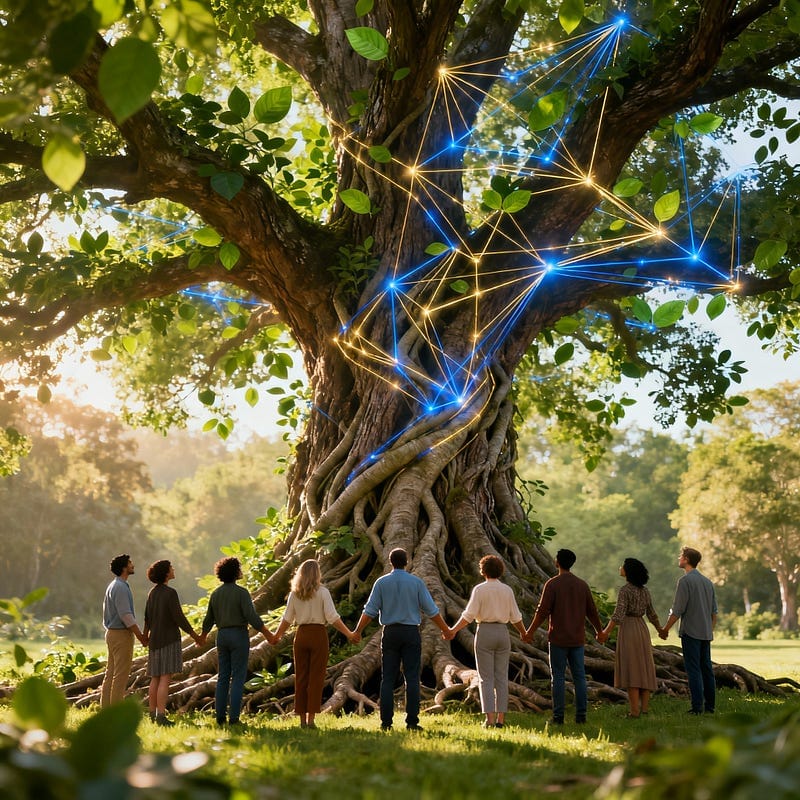
Just as the first garden was entrusted to humanity, the earth today is entrusted to us. The difference now is the scale — our “garden” is global. Our actions carry consequences that ripple across ecosystems, nations, and generations. Stewardship, then, is not passive caretaking; it is active, purposeful cultivation.
From Scripture to Strategy: Living Out Stewardship Today
Faith is not only personal — it can be strategic. When applied thoughtfully, biblical stewardship can shape how we invest, build, and innovate.
Here are some practical ways these principles connect with modern sustainability movements:
- Impact Investing
- Instead of profit alone, the aim is to generate measurable social and environmental benefit alongside financial return.
- Rooted in the stewardship mindset, it asks: “How can our resources serve life?” not just “What can they earn?”
2. Circular Economies
- The biblical image of cycles — seasons, sabbath, jubilee — reflects a rhythm of renewal rather than depletion.
- In a circular economy, resources are reused, restored, and regenerated — much like the earth’s own natural systems.
3. Ethical Governance and Community Flourishing
- Stewardship extends to leadership and how power is used.
- It calls for transparency, justice, and dignity — values deeply aligned with sustainable development goals.
Through this lens, sustainability is not a trend — it’s a calling. One that moves us beyond short-term fixes toward lasting impact grounded in purpose.
Faith-Based Impact: A Different Kind of Bottom Line
The modern economic world often measures success by a single metric: profit. Faith-based stewardship challenges that view with a more holistic bottom line:
- People: Are communities thriving, empowered, and respected?
- Planet: Are natural systems being protected and renewed?
- Purpose: Are actions aligned with values that transcend the individual?
This shift doesn’t weaken strategy — it strengthens it. Many leading impact investors and mission-driven organizations are recognizing that values create resilience. When businesses or initiatives are rooted in purpose, they can withstand shocks, build trust, and sustain meaningful change over time.
This is especially relevant in regions where traditional development has overlooked spiritual and cultural dimensions. A faith-informed approach doesn’t compete with science or policy; it complements them, weaving ethical depth into practical action.
Reclaiming the Garden: Faith Communities as Catalysts
Across the globe, faith communities are already powerful agents of change. Churches, networks, and mission-driven groups often reach where other systems cannot. With trust, relationships, and local wisdom, they have unique potential to advance sustainable impact.
Examples include:
- Community-led reforestation and conservation projects guided by stewardship values.
- Microfinance and cooperative investments that reflect shared prosperity rather than exploitation.
- Education and discipleship programs that teach environmental care as an act of worship and responsibility.
These efforts remind us that faith is not an isolated force but a bridge between vision and action.
Living the Triquetrus Way
At the heart of our approach is The Triquetrus Way — a vision that integrates faith, stewardship, and impact.
We believe:
- Faith provides the moral compass.
- Stewardship provides the framework.
- Strategic action creates lasting change.
This means investing not only in projects but in people, principles, and pathways that nurture life in its fullest sense.
Our work with partners and networks reflects this philosophy. By aligning resources with values, we aim to create circles of impact that grow outward — from individuals to communities, from communities to creation.
A Call to Cultivate, Not Consume
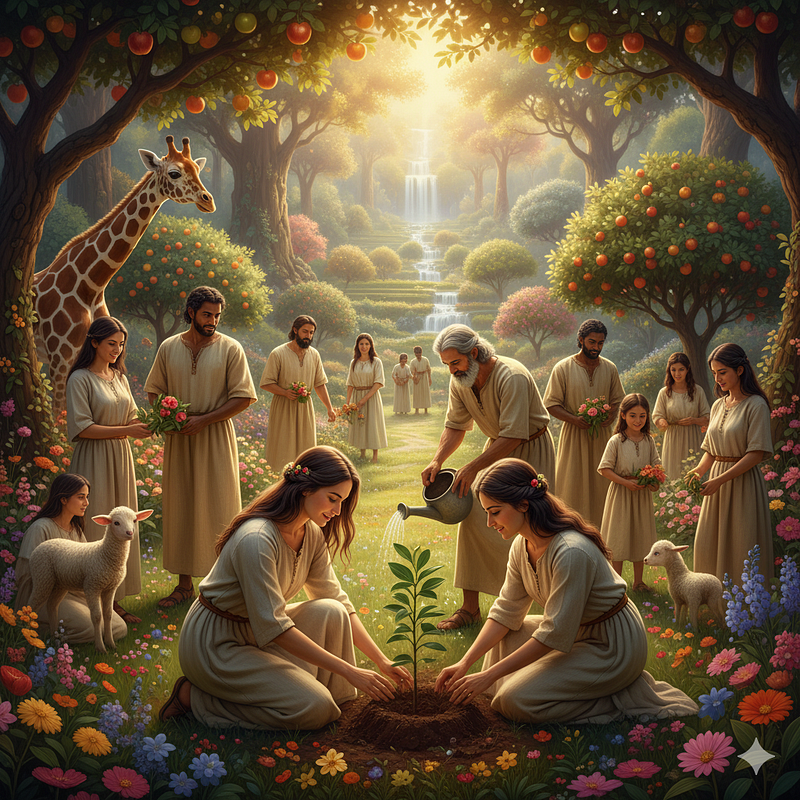
In Genesis, humanity’s first task wasn’t to conquer the garden — it was to cultivate it.
That calling remains unchanged. The modern world needs more than innovation; it needs intentional, principled stewardship.
Whether you are an investor, leader, community builder, or simply someone seeking to live more faithfully, this vision invites you to:
- See creation as a sacred trust.
- Align your work with values that endure.
- Build impact that outlives you.
This is how faith becomes foundation, not just inspiration.
Conclusion: Rooted to Flourish
Sustainability is not just about doing less harm — it’s about doing good, wisely. When anchored in faith, our efforts gain both clarity and courage.
Biblical stewardship doesn’t offer a quick fix, but it does offer a solid ground to stand on. In a world where change can feel overwhelming, that foundation matters. It reminds us that creation is not ours to exploit, but God’s to care for together.
As we step into this shared responsibility, may we become not just consumers or investors, but cultivators of lasting impact.
Attribution and Usage Rights: Inspired by the film “Meet the Robinsons.” This article is a personal reflection on resilience and perseverance. All thematic references belong to their respective creators. The images in this article have been generated by an AI model and is presented for illustrative purposes only. Its contents are synthetic and should not be relied upon as a factual representation. This article is subject to the Content Ownership, Usage Rights, and Liability Disclaimer available on our Medium.com profile page.
Copyright © 2025 Triquetrus Initiatives LLP, India. All rights reserved.Institutional Disclaimer
The Triquetrus Institute is an internal research and reflection initiative of Triquetrus Initiatives LLP (India). All content published by the Institute is intended solely for educational and discussion purposes. It does not constitute legal, financial, investment, regulatory, or professional advice and should not be relied upon as such.
Attribution and Usage Rights
Images accompanying this article have been generated using artificial intelligence models and are presented for illustrative purposes only. Such images are synthetic in nature and should not be interpreted as factual representations of real persons, events, or conditions.
This article is subject to the full Content Ownership, Usage Rights, Liability Disclaimer and all applicable Terms and Conditions available at the Triquetrus Collective Legal Portal:
https://ti.triquetruscollective.com/triquetrus-collective-legal-portal/
Readers agree to these terms by engaging with the content.
Copyright © 2025 Triquetrus Initiatives LLP, India. All rights reserved.