🌿 Stewardship as Strategy: Aligning Faith, Purpose, and Impact
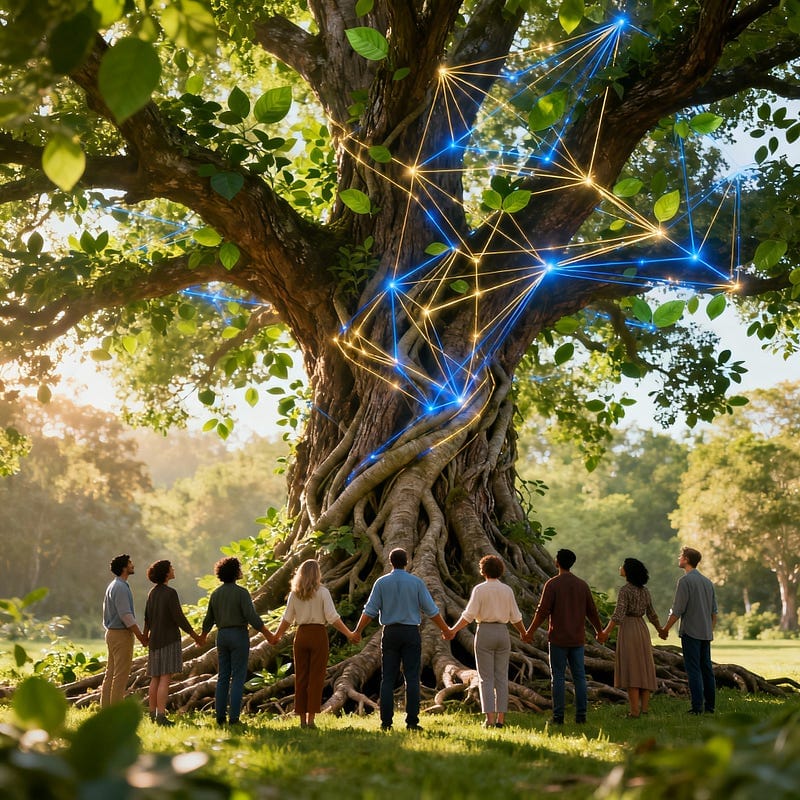
Why faith-informed stewardship offers a unique strategic advantage in building resilient, sustainable ecosystems.
Why faith-informed stewardship offers a unique strategic advantage in building resilient, sustainable ecosystems.
Introduction: Beyond Belief — A Framework for Action
Around the world, leaders, investors, and changemakers are increasingly turning to purpose-driven models to shape sustainable futures. Terms like impact investing, regenerative economies, and systems change dominate the conversation.
But long before these terms emerged, the idea of stewardship was already embedded in Scripture as a practical framework for flourishing — not just for individuals, but for entire communities and ecosystems.
In Genesis 2:15, humanity receives its first mandate:
“The Lord God took the man and put him in the Garden of Eden to work it and take care of it.”
This is not merely a theological statement. It is a strategic blueprint:
- Work it — cultivate, innovate, build.
- Take care of it — protect, sustain, steward.
When faith-informed stewardship is applied intentionally, it doesn’t compete with modern strategy — it amplifies it.
The Strategic Power of Stewardship
Sustainability strategies today often focus on efficiency and output. Faith-based stewardship adds two often-overlooked dimensions:
- Moral Clarity: A clear, value-driven compass that guides decisions beyond short-term metrics.
- Intergenerational Vision: A long-range perspective that places people and planet at the heart of every action.
This creates a strategic edge in areas like:
- Impact Investing: Aligning capital with purpose.
- Organizational Leadership: Building trust and integrity into governance.
- Systems Change: Anchoring initiatives in long-term principles rather than short-term trends.
Many organizations chase sustainability as a goal. But when stewardship becomes the operating principle, sustainability becomes a natural outcome, not just a KPI.
From Theology to Tactical: A Practical Model
To translate stewardship from belief into action, organizations can use a three-pillar strategy:
1. Purpose-Driven Design
Every effective impact strategy begins with why. Stewardship-based strategy asks:
- How does this initiative serve creation and community, not just shareholders?
- Does it align with enduring values — integrity, justice, responsibility?
Practical steps:
- Develop a Values Charter — a living document that guides decisions.
- Align investment theses with social and ecological objectives.
- Incorporate spiritual and ethical reflection into strategic planning sessions.
2. Integrated Impact Pathways
Traditional models often treat faith, business, and impact as separate silos. Stewardship integrates them.
- Finance: Use capital as a tool of renewal, not just return.
- Innovation: Design solutions that regenerate rather than deplete.
- Community: Engage local wisdom and shared responsibility.
Examples:
- Blended finance structures for environmental restoration.
- Faith-aligned social enterprises.
- Long-term land and resource stewardship agreements.
3. Adaptive Governance
Faith-informed strategies value both principle and adaptability.
- Set ethical boundaries — what will and will not be compromised.
- Build transparent reporting mechanisms that reflect triple bottom line outcomes (People, Planet, Profit).
- Encourage feedback loops, learning, and community accountability.
Case Insight: Reframing Investment as Stewardship
Consider an agricultural initiative with a dual goal: financial return and ecological restoration.
- A conventional investor may prioritize yield per acre.
- A stewardship-aligned investor asks:
# How can the land be regenerated for future generations?
# How will local communities participate and benefit?
# How can we ensure this project reflects ethical use of resources?
This doesn’t weaken financial discipline. It strengthens resilience:
- Regenerative practices improve soil health, increasing long-term yield.
- Community co-ownership reduces risk and increases stability.
- Ethical governance attracts long-term mission-aligned capital.
Faith here is not ornamental — it is operational.
Strategic Advantages of Faith-Based Stewardship
- Long-Term Resilience
Initiatives rooted in enduring values weather volatility better than those driven solely by market trends. - Enhanced Trust and Legitimacy
Transparency and purpose attract both investors and communities, creating a stronger license to operate. - Stronger Stakeholder Alignment
Faith-informed strategies unite diverse groups around shared principles — even across sectors. - Innovation Through Responsibility
Stewardship encourages creative solutions that balance efficiency with ethics. - Deeper Social Capital
Communities support initiatives that respect their dignity, culture, and environment.
Stewardship in Practice: Building Impact Ecosystems
For organizations seeking to embed stewardship strategically, here’s a practical roadmap:
Step 1: Establish Your Foundation
- Identify your faith or values framework clearly.
- Define your stewardship principles in operational terms.
- Secure leadership buy-in.
Step 2: Align Capital and Purpose
- Structure funding models around regeneration and shared value.
- Invest in projects with measurable social and environmental outcomes.
- Use transparent reporting to build trust.
Step 3: Empower Local Stakeholders
- Collaborate, don’t just consult.
- Honor local wisdom and faith expressions.
- Build co-ownership models.
Step 4: Integrate Metrics with Meaning
- Measure more than profit — include impact, equity, and legacy.
- Use both quantitative KPIs and qualitative storytelling.
Step 5: Build Adaptive Structures
- Create feedback mechanisms for course correction.
- Regularly revisit values alignment as strategy evolves.
- Stay accountable — not just compliant.
The Triquetrus Way: Stewardship as a Catalyst
At Triquetrus, we see stewardship as more than a philosophy. It’s a catalyst for transformation. Our approach blends:
- Biblical stewardship principles,
- Strategic impact investing, and
- Collaborative ecosystem building.
We work with partners, networks, and communities to:
- Invest in sustainable, measurable impact initiatives,
- Empower local leadership and shared responsibility,
- And build resilient structures that outlast individuals.
This model reflects our core belief: faith isn’t an afterthought — it’s the foundation that shapes action, investment, and impact.
Faith as a Strategic Asset
Too often, faith is treated as a private conviction. But in a rapidly changing world, faith-aligned stewardship can be:
- A strategic asset that strengthens governance and trust,
- A moral anchor that stabilizes impact strategies, and
- A unifying vision that transcends sectors and agendas.
In practice, this means:
- Leaders who act with moral clarity,
- Investors who prioritize purpose,
- Communities that co-create solutions,
- Ecosystems that flourish together.
Conclusion: A Call to Strategic Stewardship
The problems we face — environmental degradation, inequality, instability — cannot be solved by efficiency alone. They require conviction, courage, and a long-term vision.
Faith-informed stewardship does not promise easy answers, but it provides a proven, principled pathway:
- From short-term gain to long-term flourishing.
- From fragmented initiatives to integrated impact ecosystems.
- From consumption to cultivation.
As more leaders and organizations embrace this path, we believe a new model of sustainable transformation can emerge — one where faith and strategy are not opposites but allies.
“The Lord God took the man and put him in the Garden of Eden to work it and take care of it.”
— Genesis 2:15
Let’s build strategies that work and care, invest and renew, lead and steward.
Institutional Disclaimer
The Triquetrus Institute is an internal research and reflection initiative of Triquetrus Initiatives LLP (India). All content published by the Institute is intended solely for educational and discussion purposes. It does not constitute legal, financial, investment, regulatory, or professional advice and should not be relied upon as such.
Attribution and Usage Rights
Images accompanying this article have been generated using artificial intelligence models and are presented for illustrative purposes only. Such images are synthetic in nature and should not be interpreted as factual representations of real persons, events, or conditions.
This article is subject to the full Content Ownership, Usage Rights, Liability Disclaimer and all applicable Terms and Conditions available at the Triquetrus Collective Legal Portal:
https://ti.triquetruscollective.com/triquetrus-collective-legal-portal/
Readers agree to these terms by engaging with the content.
Copyright © 2025 Triquetrus Initiatives LLP, India. All rights reserved.