Nike’s Evolution: From Sweatshop Controversies to Circular Design Leadership
Nike. Few brands command as much global recognition — or have had to navigate such a public reckoning. In the 1990s, the swoosh symbol…
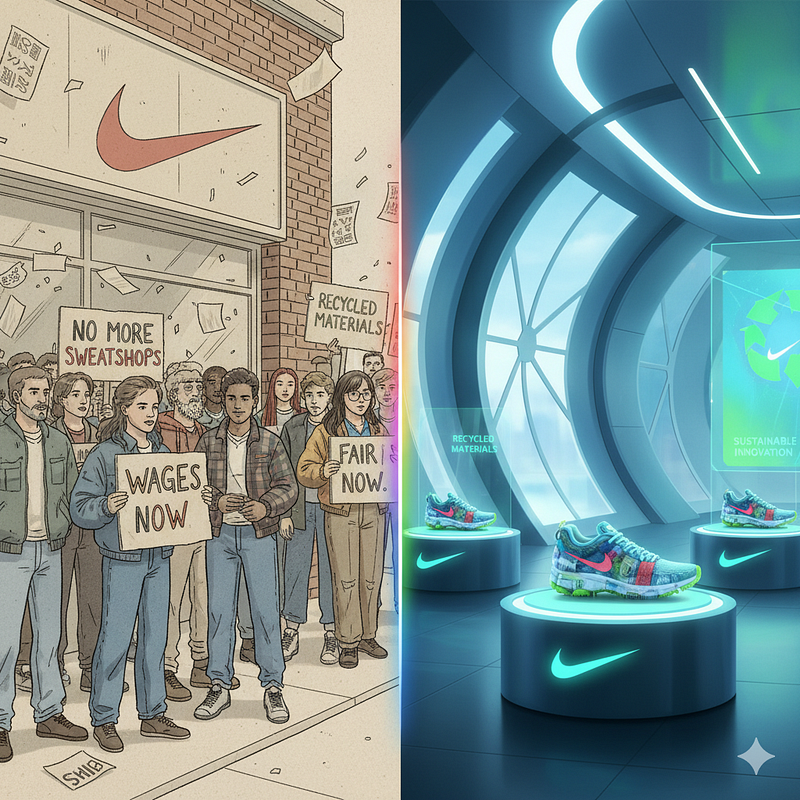
Nike. Few brands command as much global recognition — or have had to navigate such a public reckoning. In the 1990s, the swoosh symbol became synonymous with both athletic excellence and allegations of labor exploitation. Yet, three decades later, Nike stands near the forefront of circular design and sustainable innovation.
This is not a simple redemption story. It’s a blueprint of how consumer pressure, cultural shifts, and corporate transformation collide. From sweatshop scandals to leadership in circular fashion, Nike’s evolution mirrors a broader reckoning within the apparel industry itself — a shift where ethics and innovation are no longer optional, but expected.
The Era of Controversy: Nike’s 1990s Sweatshop Scandal
In the early 1990s, Nike was at the height of its cultural power. Celebrity endorsements, global campaigns, and the “Just Do It” ethos had elevated it beyond sportswear — it was a symbol of aspiration. But beneath the glossy marketing was a very different story.
Reports began to emerge from Indonesia, Vietnam, and other manufacturing hubs, alleging abusive working conditions in Nike’s contracted factories. Journalists, activists, and labor watchdogs documented low wages, unsafe environments, excessive overtime, and even instances of physical abuse. These revelations struck a nerve in the public consciousness.
Nike’s problem wasn’t just about poor labor practices — it was about hypocrisy. A company celebrating empowerment and athletic excellence was allegedly profiting from exploited laborers. Public protests erupted on U.S. campuses, NGOs organized global campaigns, and Nike became a case study in corporate accountability gone wrong.
At first, Nike resisted responsibility, claiming that independent suppliers were beyond its direct control. But this stance only deepened public backlash. What followed would shape not just Nike’s future, but the entire landscape of ethical fashion.
Turning Point: Accountability and Transparency
By the late 1990s, Nike realized that public relations spin alone wouldn’t repair its image. It needed structural change. Under intense pressure from consumers, media, and advocacy groups, Nike made several significant moves.
It developed a Code of Conduct for suppliers, enforcing minimum labor standards. It launched independent monitoring of factories, started publishing reports, and became one of the first major brands to disclose the names and locations of its suppliers. This was unprecedented at the time — a powerful shift from opacity to partial transparency.
Nike’s leadership admitted mistakes publicly, something rare for corporations of its size. Former CEO Phil Knight’s 1998 speech acknowledged that the company had become synonymous with sweatshops — and committed to changing that narrative.
The world watched, and other fashion giants followed. What began as a scandal was slowly becoming the foundation for industry-wide reform.
Rise of Circular Design and Sustainable Innovation
Fast forward to the 2010s and beyond: Nike is no longer merely defending its image. It’s actively shaping the future of sustainable apparel. The company invested heavily in circular design, aiming to create products with extended lifespans and minimal waste.
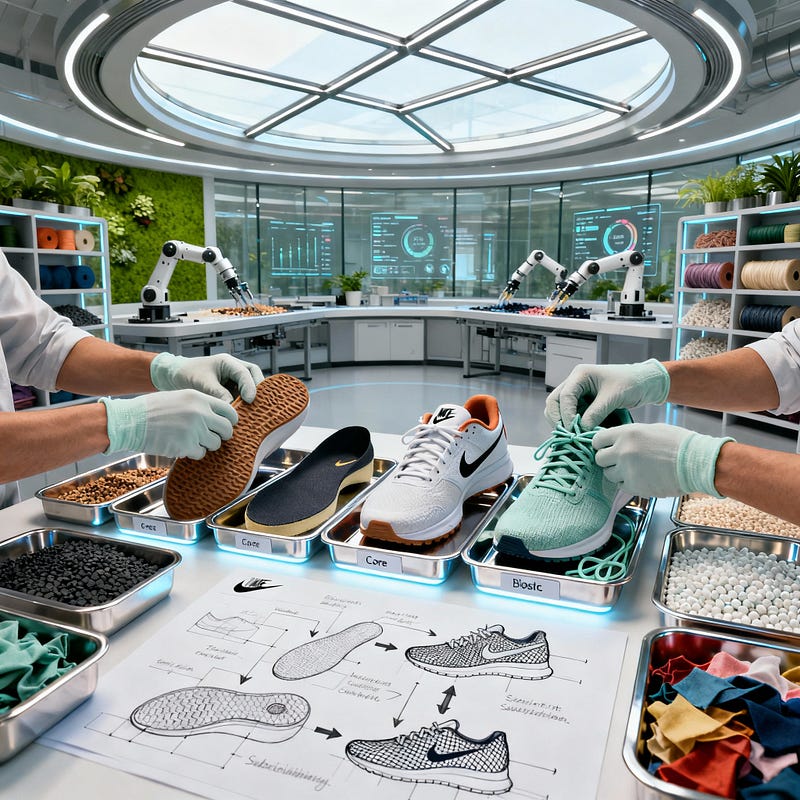
Nike’s Flyleather, for example, uses at least 50% recycled leather fibers, significantly reducing water usage and carbon emissions. The company has expanded its use of recycled polyester and organic cotton, reimagined packaging, and experimented with manufacturing processes designed for disassembly and reuse.
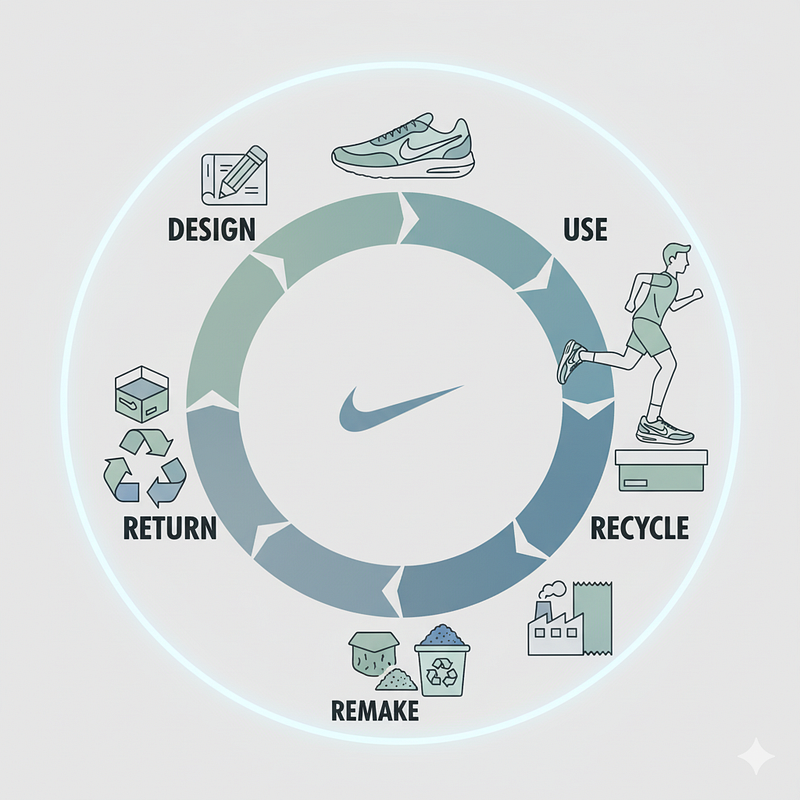
In its Move to Zero initiative, Nike committed to zero carbon and zero waste across its operations. It began designing shoes and apparel that could be repaired, recycled, or remade — aligning with principles of the circular economy. The Nike Refurbished program and Nike Grind (a material recycling platform) have become cornerstones of this strategy.
But this isn’t just about materials. It’s about systems. Circular design reimagines the product life cycle — from extraction to disposal — and Nike is trying to lead that transformation.
Ethical Fashion and the New Consumer Mindset
Nike’s evolution coincided with a broader cultural shift: consumers started to care.
Millennials and Gen Z are redefining what it means to shop. They prioritize values, transparency, and sustainability. Ethical sourcing and eco-conscious materials are not niche interests anymore — they’re mainstream expectations. Apps now allow buyers to scan a tag and see a product’s supply chain footprint. Social media amplifies both praise and criticism in real time.
This new consumer mindset is also fueling alternative platforms. JeftinStore.com, for example, demonstrates how sustainable retail can be accessible and affordable — not just a luxury reserved for eco-elites. Platforms like these align with the same principles that now push global giants to adapt: transparency, responsibility, and circularity.
For Nike, this means competing not just with other athletic brands but with a new kind of value-driven ecosystem.
Challenges and Criticisms that Remain
For all its progress, Nike’s journey is not without criticism. Watchdog organizations still flag concerns around supply chain opacity, subcontracting, and allegations of greenwashing. Critics argue that the brand’s sustainability efforts, while meaningful, coexist with a massive scale of production that inherently strains environmental resources.
The circular economy is promising, but implementation at Nike’s global scale is enormously complex. Repair and reuse programs reach only a fraction of its customers. Many products remain difficult to recycle efficiently, and truly closed-loop manufacturing remains aspirational.
Moreover, as consumer awareness grows, so does scrutiny. Sustainability claims now face fact-checking, audits, and legal accountability in many countries. For Nike, the challenge isn’t just to do better — it’s to prove it.
Looking Forward: Leadership in Circular Fashion
Despite these challenges, Nike’s trajectory offers valuable lessons. The same company once synonymous with labor exploitation is now investing in sustainable innovation that may shape the future of fashion itself.
The brand is exploring closed-loop manufacturing, scaling up repair and resale programs, and experimenting with biodegradable and regenerative materials. It’s collaborating with designers, technologists, and environmental scientists to future-proof its business against ecological collapse and regulatory shifts.
Nike’s work also has ripple effects. When a giant moves, others follow. Circular design, once an idealistic concept, is now becoming a mainstream business strategy across industries.
Conclusion
Nike’s story isn’t about perfection — it’s about evolution. From the harsh spotlight of sweatshop controversies in the 1990s to the bright halls of sustainable innovation labs today, the journey has been shaped by relentless consumer pressure, global scrutiny, and the rise of ethical fashion movements.
Circular design is not a marketing fad; it’s a survival strategy for the planet and for brands that want to remain relevant in a rapidly changing world. Nike’s transformation shows that even the biggest corporations can change course when people demand it.
And as sustainable retail options like JeftinStore.com remind us, the responsibility — and the power — doesn’t just lie with corporations. It lies with consumers, too.
Institutional Disclaimer
The Triquetrus Institute is an internal research and reflection initiative of Triquetrus Initiatives LLP (India). All content published by the Institute is intended solely for educational and discussion purposes. It does not constitute legal, financial, investment, regulatory, or professional advice and should not be relied upon as such.
Attribution and Usage Rights
Images accompanying this article have been generated using artificial intelligence models and are presented for illustrative purposes only. Such images are synthetic in nature and should not be interpreted as factual representations of real persons, events, or conditions.
This article is subject to the full Content Ownership, Usage Rights, Liability Disclaimer and all applicable Terms and Conditions available at the Triquetrus Collective Legal Portal:
https://ti.triquetruscollective.com/triquetrus-collective-legal-portal/
Readers agree to these terms by engaging with the content.
Copyright © 2025 Triquetrus Initiatives LLP, India. All rights reserved.